
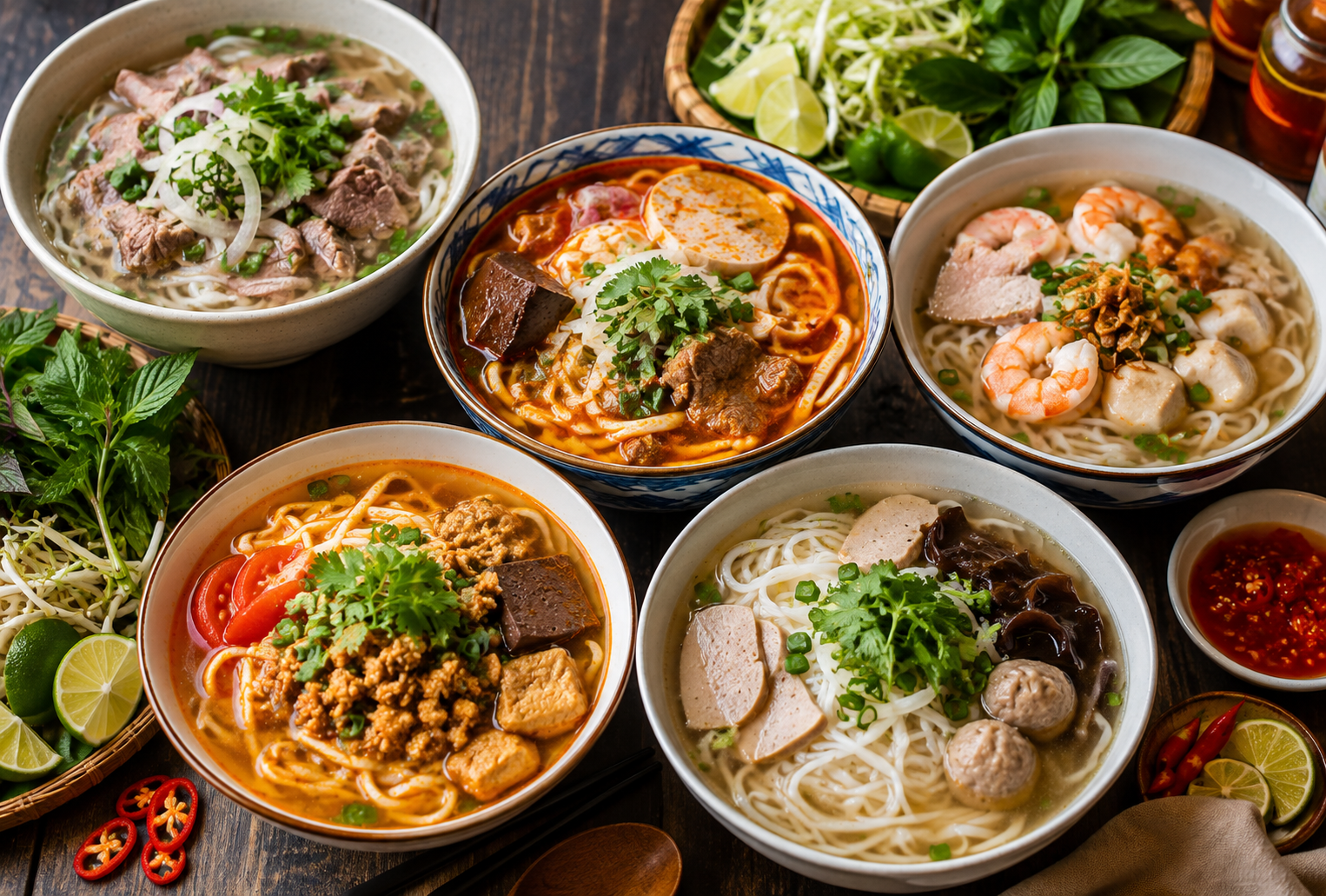
Vietnamese Noodle Soups Beyond Pho You Should Try
Love pho? Discover Vietnamese noodle soups beyond the classic pho, including bun bo Hue, hu tieu, banh canh, and other regional favorites to try.
Read more
Pho may be the Vietnamese noodle soup most familiar to people in the United States, but it is only one part of Vietnam's rich noodle soup tradition.
Across Vietnam, noodle soups vary dramatically from one region to another. Some feature intensely spicy broths, while others are light and delicate. Some use thin rice noodles, while others rely on thick, chewy noodles made from tapioca or rice flour. The toppings can range from beef and pork to shrimp, fish, crab, herbs, and vegetables.
If pho is your usual Vietnamese order, trying another noodle soup is one of the easiest ways to discover just how diverse Vietnamese cuisine can be.
Whether you're looking for something spicy, seafood-forward, hearty, or completely different from traditional beef pho, there is a Vietnamese noodle soup worth trying.
And you don't necessarily have to search far to find one. Many Vietnamese restaurants available through Springroll offer noodle soups beyond pho, making it easy to browse menus and order online for pickup or delivery where available.
Pho became internationally famous for good reason. Its aromatic broth, rice noodles, fresh herbs, and choice of meats create a balanced and comforting meal.
But Vietnamese cuisine developed across a long and geographically diverse country. Northern, Central, and Southern Vietnam each developed their own culinary traditions, influenced by local ingredients, climate, geography, and history.
That regional diversity is especially noticeable in noodle dishes.
A bowl of bun bo Hue, for example, is dramatically different from pho. It is spicy, aromatic, and traditionally associated with the city of Hue in Central Vietnam. Hu tieu, popular in Southern Vietnam, can feature a lighter, savory-sweet broth with pork, shrimp, and other toppings. Banh canh uses thick, chewy noodles that can make the bowl feel closer to a noodle stew than a conventional rice noodle soup.
These dishes demonstrate why exploring beyond pho can make ordering Vietnamese food much more interesting.
Before exploring other noodle soups, it helps to understand what pho itself really is, since even pho has more range than a lot of diners realize.
"Pho" technically refers to the flat rice noodle used in the dish, not just the finished bowl of soup. The noodle is what gives the dish its name, while the broth, protein, and garnish can vary quite a bit from one bowl to the next.
The two most common versions found in the US are pho bo, made with beef broth and beef, and pho ga, made with a lighter chicken broth and chicken. Both use the same flat rice noodles, but the broths taste noticeably different. Pho bo tends to be richer and deeper, often simmered for hours with charred onion, ginger, and spices such as star anise and cinnamon. Pho ga is lighter and more delicate, with a cleaner chicken flavor.
Pho also changes depending on where in Vietnam it comes from. Northern-style pho, associated with Hanoi, tends to favor a simpler, clearer broth with a cleaner beef flavor. It's traditionally garnished with just a few ingredients, most notably a generous amount of scallions and a bit of cilantro, rather than the large plate of fresh herbs, bean sprouts, and lime that many American diners expect. Hoisin sauce and sriracha are also less common on the side in the Northern style, since the broth is meant to speak for itself.
Southern-style pho, which is more familiar to many diners in the US, tends to be sweeter and is typically served with a larger array of add-ins, including Thai basil, bean sprouts, sawtooth herb, lime wedges, and chili, along with hoisin sauce and sriracha for diners to customize their bowl.
Understanding these differences shows just how much variation exists within pho alone. And once you start looking past pho entirely, that variation becomes even more dramatic.
If you like bold flavors and a little heat, bun bo Hue should probably be your first noodle soup beyond pho.
Originating in Hue in Central Vietnam, bun bo Hue is known for its deeply aromatic and spicy broth. The soup traditionally gets much of its character from lemongrass and chili, with a savory base that can include beef and pork.
The noodles are also different from the flat rice noodles commonly associated with pho. Bun bo Hue typically uses round rice vermicelli noodles that are thicker and chewier, giving the soup a more substantial texture.
Toppings vary by restaurant but may include beef, pork, beef tendon, pork sausage, and other ingredients.
One of the biggest differences you'll notice is the broth. While pho is often associated with a clear, fragrant broth built around spices such as star anise and cinnamon, bun bo Hue has a more assertive personality. Lemongrass, chili, shrimp paste, and other seasonings can give it a complex combination of spicy, savory, and aromatic flavors.
If you normally order beef pho and want to try something with more heat and intensity, bun bo Hue is an excellent next step.
Springroll restaurants offer examples of this style. Pho Lover - Schaumburg currently lists Spicy Hue Pho, also identified as Bun Ho Hue, with spaghetti-style vermicelli noodles, beef brisket, beef tendon, pork rolls, and a spicy lemongrass and shrimp-based broth.
Browse Pho Lover - Schaumburg and order online
Another noodle soup worth discovering is hu tieu, particularly popular in Southern Vietnam.
Hu tieu comes in many variations, so there isn't necessarily one single bowl that defines the dish. Depending on the restaurant, you might find rice noodles paired with pork, shrimp, fish balls, seafood, sliced beef, or a combination of meats and seafood.
The broth tends to be lighter and more delicate than the deeply spiced broth associated with some versions of pho or bun bo Hue. It can have a savory, slightly sweet character, with toppings providing much of the bowl's texture and flavor.
Some versions are served as a traditional soup, while others are served "dry," with the noodles and toppings presented separately from a bowl of broth.
That makes hu tieu particularly interesting if you enjoy customizing the way you eat noodles.
At Vinh Hoa - Houston, the current menu includes several hu tieu options. Diners can find fresh rice noodle soup with shrimp, pork, and fish balls, combination meat hu tieu, fish ball and seafood combinations, and a beef version with satay sauce. The restaurant also offers a dry hu tieu option with the soup served on the side.
Explore Vinh Hoa - Houston's Vietnamese noodle menu
If you've mostly eaten thin rice noodles, banh canh offers a completely different experience.
Banh canh is made with thick noodles that can be prepared using rice flour, tapioca flour, or a combination of the two. The result is a noodle that is noticeably thicker and chewier than the noodles used in pho.
The soup itself varies considerably. Depending on the regional style and restaurant, banh canh can be served with seafood, pork, crab, fish, shrimp, or other ingredients.
One popular variation is banh canh cua, a crab noodle soup that combines thick noodles with a rich seafood-based broth. Other versions may feature fish or pork.
The texture is one of the main reasons to try it. If you enjoy udon or other thick noodles but want to experience a Vietnamese version, banh canh is an interesting choice.
Quan Nem Ninh Hoa - Elk Grove currently has a dedicated Banh Canh-Soup section featuring Banh Canh Cha Ca, made with assorted fish cake and yellowtail over udon-style noodles. The restaurant also offers Bun Cha Ca, with fish cake and yellowtail over vermicelli in a special broth.
Browse Quan Nem Ninh Hoa - Elk Grove's menu
If you enjoy seafood and tangy flavors, bun rieu is another Vietnamese noodle soup to put on your list.
Bun rieu is traditionally associated with Northern Vietnam and is known for a broth that combines tomatoes with freshwater crab. Depending on the recipe, the soup may also include tofu, pork, shrimp paste, herbs, and other ingredients.
The tomato gives the broth a pleasantly bright, slightly acidic flavor that makes it stand apart from the darker, more aromatic broth found in many beef noodle soups.
The crab component can also give the soup a distinctive seafood character.
Because recipes vary, bun rieu can look and taste somewhat different from one restaurant to another. Some versions emphasize crab, while others include additional seafood, pork, tofu, or vegetables.
If you usually choose beef-based noodle soups, bun rieu is a great way to explore a completely different flavor profile.
When you see it on a Vietnamese menu, it may appear as Bun Rieu, Bun Rieu Cua, or Vietnamese Crab Noodle Soup.
Another lesser-known Vietnamese noodle soup is bun moc, a comforting dish associated with Northern Vietnamese cuisine.
The soup typically features a clear pork-based broth and round rice vermicelli noodles. What makes bun moc distinctive is its combination of pork-based toppings, which can include pork meatballs, sliced pork, mushrooms, and Vietnamese sausage.
Compared with bun bo Hue, bun moc is much milder. There is no emphasis on spicy chili or an intensely seasoned broth.
That makes it a good choice if you want to try something beyond pho without jumping immediately into a spicy soup.
The combination of light broth, chewy noodles, mushrooms, and savory pork toppings creates a comforting bowl that is especially appealing when you want something warm without overwhelming flavors.
Bun moc may be less common on American Vietnamese restaurant menus than pho or bun bo Hue, so if you spot it while browsing a menu, consider giving it a try.
Vietnam's long coastline means seafood plays an important role in many regional dishes, including noodle soups.
Bun ca is a Vietnamese fish noodle soup that can vary by region. It commonly features rice vermicelli, fish, herbs, and a flavorful broth.
One popular preparation uses fried or grilled fish, which gives the bowl a savory texture and adds another layer of flavor to the broth.
At Quan Nem Ninh Hoa - Elk Grove, for example, the menu includes Bun Cha Ca, featuring assorted fish cake and yellowtail over vermicelli in a special broth.
This is an especially good option if you enjoy seafood and want to move away from the beef and chicken combinations that dominate many pho menus.
One of the most interesting things about hu tieu is how many versions exist.
You may encounter hu tieu with shrimp, pork, fish balls, seafood, or combinations of several proteins. Some bowls emphasize a clear broth, while others are served dry with the broth on the side.
Pho Station - Hanford currently offers a Special Noodles Soup section featuring seafood, shrimp, and tofu hu tieu. Its menu describes these as rice noodle soups served with chicken broth and topped with onions, scallions, and cilantro.
The seafood version combines fish balls, imitation crab, and shrimp, making it a good choice for anyone who prefers seafood over beef.
The shrimp version keeps things simpler, while the tofu option offers a meat-free alternative.
This variety is one of the reasons hu tieu is worth exploring. You can find a version that matches your preferred ingredients rather than ordering the same combination every time.
Browse Pho Station - Hanford's menu and order online
If you're wondering which soup to try first, it helps to think about the major differences in broth, noodles, toppings, and flavor.
Pho generally features flat rice noodles and an aromatic broth, often accompanied by beef or chicken and fresh herbs.
Bun bo Hue uses round rice vermicelli and a more intensely seasoned, spicy broth with lemongrass and chili.
Hu tieu can use thin rice noodles and a lighter broth, often paired with pork, shrimp, fish balls, or seafood. It may also be served dry.
Banh canh stands out because of its thick, chewy noodles, which can be made from rice flour, tapioca flour, or both.
Bun rieu is known for its tomato-forward broth and crab-based flavors.
Bun moc generally offers a lighter pork-based broth with vermicelli and pork toppings.
Bun ca focuses on fish and seafood, giving the soup a completely different character from beef-based pho.
Once you understand these differences, ordering becomes much easier. Instead of simply asking yourself whether you want "noodles," you can decide whether you're craving something spicy, light, seafood-forward, rich, or chewy.
Your ideal choice depends largely on what you already enjoy.
If you love spicy food, start with bun bo Hue. Its combination of chili, lemongrass, savory broth, and chewy vermicelli makes it one of the boldest choices.
If you prefer seafood, bun ca or a seafood-focused hu tieu can be a great introduction.
If you like thick, chewy noodles, try banh canh.
If you prefer lighter and more delicate flavors, hu tieu or bun moc may be a better choice.
And if you're looking for something tangy and tomato-forward, bun rieu is worth seeking out.
There isn't a wrong answer. The best approach is to choose something that contrasts with your usual pho order.
A noodle soup can easily stand on its own as a complete meal, but Vietnamese restaurants often offer appetizers and sides that pair beautifully with soup.
Fresh spring rolls, known as goi cuon, are a particularly natural pairing. Rice paper wraps filled with ingredients such as shrimp, pork, vermicelli, lettuce, and herbs provide a cool and fresh contrast to a hot bowl of noodles.
Fried Vietnamese egg rolls, or cha gio, offer the opposite contrast. Their crisp exterior adds texture to a meal that is otherwise dominated by broth and noodles.
You can also add Vietnamese iced coffee or another cold beverage if you're enjoying a spicy or richly seasoned soup.
If you're interested in exploring Vietnamese spring rolls, Springroll's Ultimate Guide to Spring Rolls covers Vietnamese goi cuon and cha gio, along with spring roll traditions from other Asian cuisines.
Ordering noodle soup online can be a convenient way to explore dishes you've never tried before.
Start by looking beyond the restaurant's "Pho" section. Some menus have a separate Noodle Soup, Special Noodles Soup, Hu Tieu, or Banh Canh category.
If you're unsure about a dish, look at the description for clues about the noodles, broth, and protein.
For example, if you see "spicy lemongrass broth," you're probably looking at a bun bo Hue-style dish. If you see shrimp, pork, and fish balls with rice noodles, you may be looking at hu tieu. If the menu describes thick or udon-style noodles, it could be banh canh.
Springroll makes it easy to browse participating Asian restaurants and explore their menus before placing your order. You can take your time comparing dishes and choose pickup or delivery where available.
This is especially useful when you're trying a less familiar Vietnamese dish for the first time. You can read the menu description, decide what sounds appealing, and order without having to guess.
Ready to explore Vietnamese noodle soups beyond pho? Springroll features restaurants offering a variety of Vietnamese noodle dishes, making it easier to discover something new and order online.
Here are a few restaurants to explore:
Located in Schaumburg, Illinois, Pho Lover offers a broad Vietnamese menu centered around pho but also includes a Spicy Hue Pho, identified as Bun Ho Hue.
Its version features vermicelli noodles, beef brisket, beef tendon, pork rolls, and a spicy lemongrass and shrimp-based soup. It's an easy choice if you're looking for your first noodle soup beyond traditional pho.
Browse Pho Lover - Schaumburg and Order Online
In Houston, Vinh Hoa offers several Vietnamese noodle soup options under its Hủ Tiếu and Mì section.
The menu includes fresh rice noodle soup with shrimp, pork, and fish balls, combination meat hu tieu, fish ball and seafood options, and a sliced beef version with satay sauce. There is also a dry hu tieu preparation with soup served on the side.
This makes Vinh Hoa a particularly interesting option if you want to compare different hu tieu preparations.
Browse Vinh Hoa - Houston and Order Online
Pho Station - Hanford offers a dedicated Special Noodles Soup section with seafood, shrimp, and tofu hu tieu.
The restaurant describes these as rice noodle soups with chicken broth, topped with onions, scallions, and cilantro. The seafood version includes fish ball, imitation crab, and shrimp, while the shrimp and tofu versions provide simpler alternatives.
Browse Pho Station - Hanford and Order Online
For diners in Elk Grove, Quan Nem Ninh Hoa offers several Vietnamese noodle soup options, including Banh Canh Cha Ca and Bun Cha Ca.
The Banh Canh Cha Ca combines assorted fish cake and yellowtail with thick udon-style noodles, while Bun Cha Ca pairs fish cake and yellowtail with vermicelli in a special broth.
It's a great restaurant to explore if you want to move beyond the more familiar beef and chicken noodle soups.
Browse Quan Nem Ninh Hoa - Elk Grove and Order Online
The easiest way to explore Vietnamese noodle soups is to start with a flavor profile you already enjoy.
If you normally order rare beef pho and want something similar but spicier, bun bo Hue is a natural next step. If you enjoy seafood, try hu tieu with shrimp and fish balls or a fish-based noodle soup.
If texture is important to you, banh canh is worth seeking out because its thick noodles feel completely different from the flat noodles in pho.
Don't be afraid of unfamiliar Vietnamese names on a menu, either. Learning a few terms can make ordering much easier.
Bún generally refers to rice vermicelli, while hủ tiếu refers to a style of noodle commonly used in Southern Vietnamese noodle soups. Bánh canh refers to the thicker noodles used in dishes of the same name.
Once you recognize these terms, a Vietnamese menu becomes much easier to navigate.
Pho may be the dish that introduced many Americans to Vietnamese cuisine, but it shouldn't be the end of the journey.
Vietnamese noodle soups demonstrate how dramatically ingredients and cooking traditions can change from one region to another. A spicy bowl of bun bo Hue offers a completely different experience from a delicate hu tieu. Banh canh introduces thick, chewy noodles, while bun rieu brings a bright tomato and crab flavor to the table.
Trying these dishes can also make ordering at Vietnamese restaurants more exciting. Instead of automatically choosing the same bowl of pho every time, you can explore a different regional specialty whenever you're in the mood for something new.
And because many of these dishes are available through online ordering, discovering them can be as easy as browsing a restaurant menu from home.
If pho is your go-to Vietnamese noodle soup, consider making your next order something different.
Try bun bo Hue when you want spice and bold aromatics. Choose hu tieu for a lighter, versatile bowl with pork, shrimp, seafood, or other toppings. Go for banh canh when you want thick, chewy noodles, or seek out bun rieu for its tomato and crab flavors.
You can also explore bun moc for a lighter pork-based soup or bun ca if seafood is more your style.
The variety of Vietnamese noodle soups is a reminder that there is much more to Vietnamese cuisine than pho. Every bowl offers another combination of noodles, broth, proteins, herbs, and regional flavors to discover.
When you're ready to try something new, Springroll makes it easy to discover participating Vietnamese and Asian restaurants, browse their menus, and order online for pickup or delivery where available.
Ready to go beyond pho? Explore Vietnamese restaurants on Springroll.com and order your next noodle soup online.
.png)